
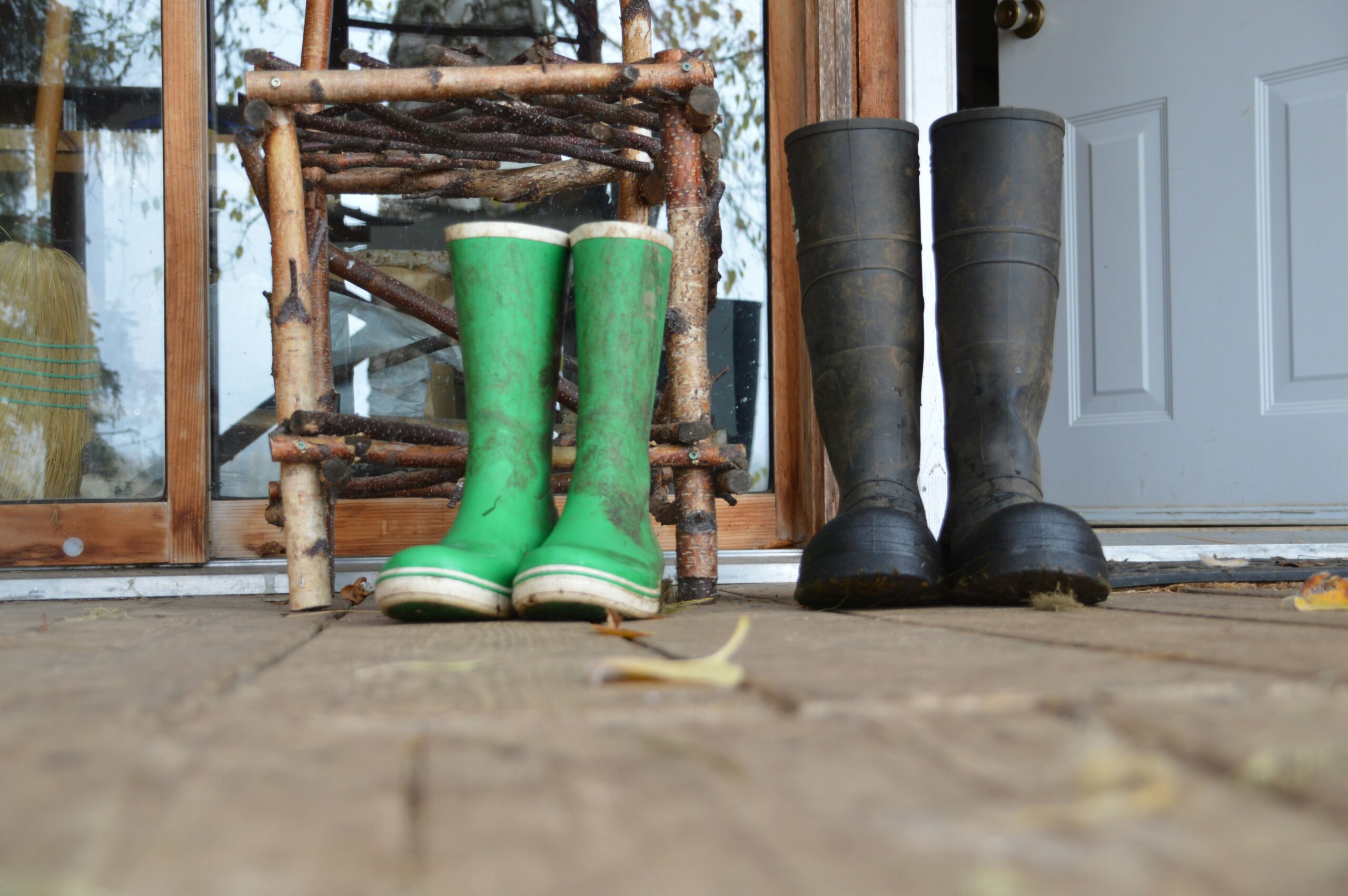
A good pair of work boots is one of the most important purchases you make. You’re often on your feet for hours at a time, in conditions that range from muddy barn alleys to dry gravel drives to frozen ground. The wrong boot isn’t just uncomfortable. It can become a larger problem over a long day.
What to Look For
Waterproofing
This is non-negotiable for farm and property work. Wet feet cause blisters, reduce circulation in cold weather, and make a long day of physical work significantly more miserable. Look for either full rubber or neoprene construction for complete waterproofing, or full-grain leather with a waterproof membrane for leather work boots.
Waterproof treatments applied to non-waterproof leather aren’t a good substitute. They provide limited protection that degrades quickly under regular farm conditions.
Sole and Traction
Slip-resistant outsoles matter on wet barn concrete, muddy ground, and any surface that gets slick. Most farm-specific boots use rubber lug outsoles that shed mud and grip on multiple surfaces. Oil-resistant outsoles are worth consideration if you work around equipment or in a barn where spills are common.
Shaft Height
Taller shafts provide more ankle support and keep debris, mud, and water out when you are working in conditions where lower boots would fill with material. Most rubber farm boots run 15 to 17 inches. Leather work boots come in 6-inch and higher configurations. If you regularly work in deep mud or standing water, taller is better.
Safety Toe
Steel and composite safety toes protect against impact and compression from falling equipment, gates, and livestock. Whether you need one depends on your specific work. Livestock handlers, anyone working around heavy equipment, and anyone dealing with heavy materials should consider a safety toe. Composite toes are lighter than steel and do not conduct cold, which matters in winter.
Chemical Resistance
Manure, fertilizers, and cleaning chemicals are hard on leather and degrade standard rubber faster than normal wear. Neoprene and PVC construction hold up better in these environments than leather. If chemical exposure is a regular part of your work, factor this into your boot selection.
The Two-Boot Principle
One practical recommendation that shows up consistently among experienced farmers: own two pairs of boots. An insulated winter pair and a non-insulated warm-weather pair. Wearing insulated boots from April through October leads to overheated feet, excessive sweat, and accelerated breakdown of the boot. Rotating pairs also extends the life of both.
Recommended Boots
Best All-Around Rubber Boot: Muck Boot Chore Cool
Muck boots are the most widely used farm boot in this category for good reason. Five millimeter neoprene construction provides complete waterproofing and enough insulation for three-season use. The blown rubber outsole delivers slip-resistant traction on wet barn floors, mud, and gravel. A kick rim on the heel allows hands-free removal when your hands are full.
The gathered collar keeps mud and debris from entering the top of the boot. Rubber overlays in high-wear areas on the toe and heel extend durability.
Available in standard, steel toe, and XF (extended calf) versions. The XF version is worth knowing about for anyone with larger calves who has struggled to fit standard rubber boots.
Muck Boot Chore Cool Rubber Work Boot
Best Leather Work Boot: Timberland Men’s PRO Boondock / Carhartt Women’s Gilmore Hiker Work Boot
The Timberland PRO Boondock is one of the most consistently recommended leather work boots in this category for both men and women. Premium waterproof leather upper with an internal waterproof membrane, Anti-Fatigue Technology footbed for all-day shock absorption and energy return, and an All-Weather TPU outsole that is heat, slip, oil, and abrasion resistant. Composite safety toe on most versions keeps the boot lightweight while meeting ASTM safety standards.
The Anti-Fatigue Technology is the standout feature. It uses geometrically designed cones in the footbed to absorb shock and return energy to the foot. Buyers who spend long hours on their feet, on concrete or uneven ground, consistently cite this as what separates the Boondock from comparable boots.
Timberland PRO offers a 30-day comfort guarantee. Wear them on the job and return them within 30 days if they do not work for you. That is an unusual offer in this category and worth knowing about.
For women, the Carhartt Gilmore is the stronger option in this category. It shares the same core priorities: waterproof leather upper, Storm Defender breathable membrane, EVA midsole with Insite Technology footbed, and a rubber lug outsole built for outdoor terrain. Buyers report it runs true to size and requires minimal break-in time.
Timberland PRO Boondock 6″ Soft Toe Waterproof Work Boot, Men’s
Carhartt Women’s Gilmore Waterproof 6″ Hiker Work Boot
Best Winter Boot: BOGS
When temperatures drop below freezing and the chore list does not, the Bogs Classic High is the standard recommendation among Midwest and northern farmers. Rated to -40 degrees Fahrenheit. Rubber upper with a four-way stretch neoprene inner bootie for comfort over extended wear. Non-slip rubber outsole, antimicrobial insole, and moisture-wicking sock liner.
These are not boots you wear in July. They are purpose-built for the January through March window when waterproof insulation is the primary requirement and warmth matters more than breathability. Buyers in northern climates who rotate between a summer pair and these in winter consistently report that the Bogs make cold-weather morning chores significantly more manageable.
Men’s – Bogs Men’s Classic High Waterproof Insulated Boot
Women’s – BOGS Whiteout Faded
A Few Practical Notes
Break in leather boots before relying on them. New leather work boots require a break-in period. Wear them for short periods first and gradually increase time. Wearing unbroken boots for a full day of physical farm work is a reliable way to develop blisters.
Treat leather regularly. Full-grain leather is durable but it is not indestructible. Conditioning it once or twice a season prevents the leather from drying and cracking, particularly at flex points. Road salt from treated driveways is especially hard on leather. Rinse boots after exposure and condition before storing.
Replace insoles before you replace the boots. The factory insole in most work boots is adequate but not exceptional. Replacing it with a quality aftermarket insole extends the comfortable working life of the boot and is significantly cheaper than buying a new pair.
Links may be added or updated over time. They do not affect how products are selected or discussed.
Affiliate Disclosure This article may contain affiliate links. If you buy through one of those links, Working Acre may earn a small commission at no extra cost to you. Product mentions are based on usefulness, fit, and relevance to the topic.