
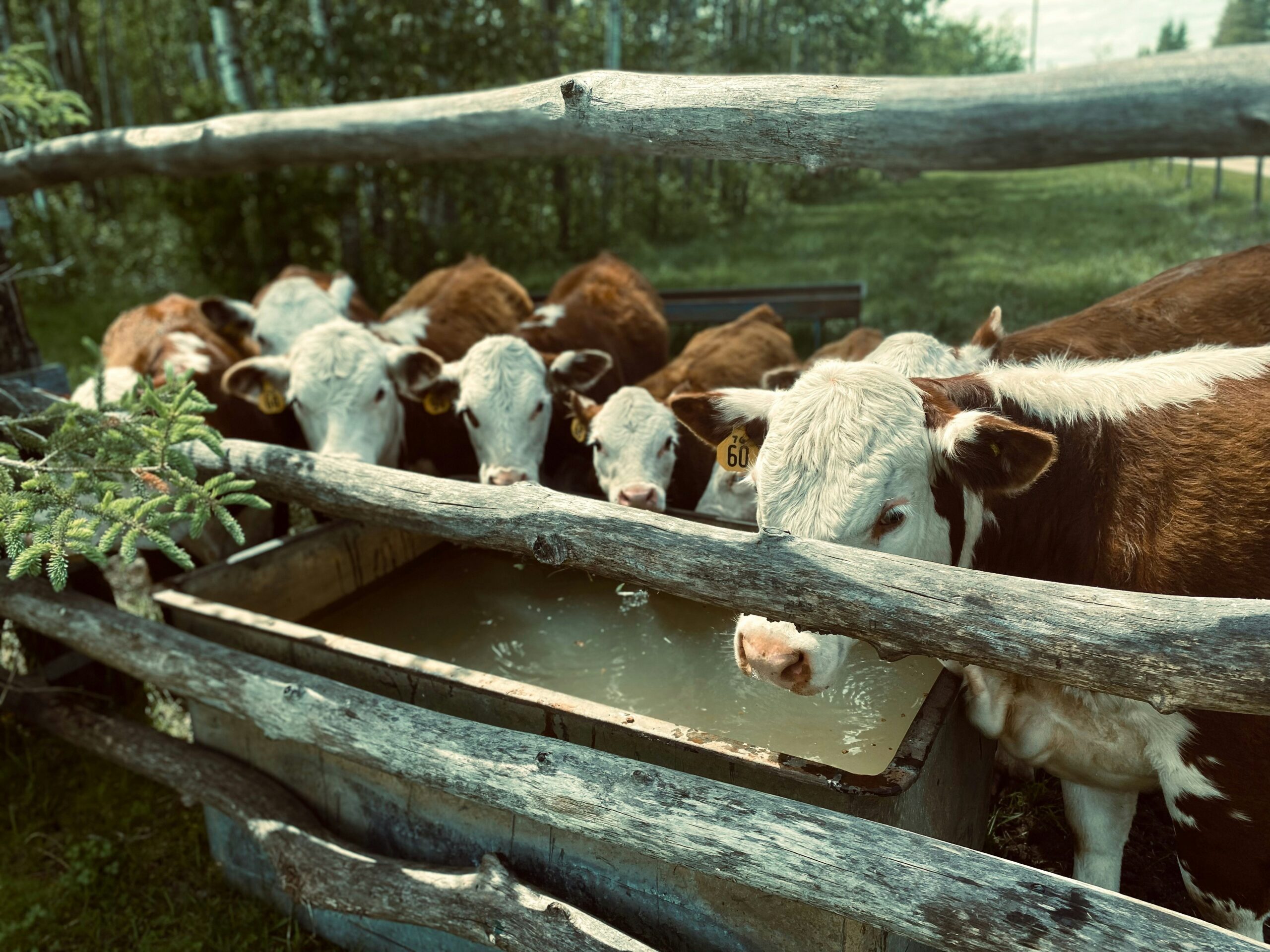
Cold-weather water is one of the most labor-intensive daily chores on a farm or homestead. Breaking ice on a stock tank at 6am in February is nobody’s idea of a good morning. A stock tank heater, more precisely called a de-icer, keeps that chore off your list from first freeze to spring thaw.
Choosing the right one typically comes down to four things: your tank type, your tank size, your power situation, and the climate you are dealing with. Get those four right and the decision becomes clear.
De-icer or Heater: What These Units Do
Stock tank de-icers are not heaters in the traditional sense. They are designed to keep one area of the tank open and ice-free so animals always have access to liquid water, not to warm it to a comfortable temperature.
Most units are thermostatically controlled and activate when water temperature nears freezing, typically around 35 to 40 degrees Fahrenheit, and shut off once the risk of icing passes. This on-demand operation keeps electricity costs reasonable through a long winter.
That distinction matters when sizing a unit. The goal is preventing ice, not heating the tank. A properly sized de-icer handles that job without running continuously.
Tank Type Determines Your Options
This is the most important factor and the one most people overlook until they have already bought the wrong unit.
Metal tanks: Both submersible and floating de-icers work in metal tanks. You have the most options here.
Plastic and rubber tanks: Not all de-icers are rated for plastic. A unit that runs too hot or contacts a plastic wall can damage the tank. Look specifically for units rated safe for plastic. Farm Innovators and K&H both make plastic-safe options and label them clearly.
Rubbermaid tanks: Farm Innovators makes a drain plug de-icer designed specifically for Rubbermaid stock tanks. The cord stays completely out of the water and the unit goes unnoticed by livestock. If you run Rubbermaid tanks, this is worth knowing about.
Always check the product listing for tank compatibility before purchasing.
Wattage and Tank Size
A general guideline used widely in the industry:
- Up to 50 gallons: 250 to 500 watts
- 50 to 100 gallons: 500 to 1,000 watts
- 100 to 300 gallons: 1,000 to 1,500 watts
In regions with extended sub-zero temperatures, sizing up within each range is a reasonable precaution. A de-icer working at the lower end of its rated capacity handles extreme cold better than one running at its limit.
Submersible vs. Floating
Submersible: Rests on the bottom of the tank. Stays out of the way of animals, less visible, and less likely to be disturbed. Most submersible units include a protective cage around the heating element. Requires the heating element to remain fully submerged at all times. Never run a submersible de-icer in a low tank.
Floating: Floats at the surface of the water. Easier to install and remove. Some animals, particularly horses, may interact with floating units out of curiosity. A cord clip to keep the cord secured to the tank rim is standard on most models and worth using.
Both types work. The choice often comes down to your tank setup and which animals you are managing.
Recommended Units
Best for Large Tanks: Farm Innovators Ice Chaser 1500W Submersible
The Farm Innovators Ice Chaser is the most widely used submersible de-icer in this category for large tanks. Cast aluminum construction handles heat transfer efficiently and resists rust. The built-in thermostat activates only when water temperature nears freezing, reducing operating costs. Anti-chew cord protection is included. Rated safe for plastic tanks. Suitable for tanks up to 300 gallons.
Farm Innovators Ice Chaser 1500W Cast Aluminum Submersible Tank De-Icer
Best Floating Option for Metal Tanks: Farm Innovators H-4815 1500W Floating De-Icer
The H-4815 is a floating de-icer for metal tanks. Thermostatically controlled, keeps an ice-free area approximately 30 inches in diameter even in sub-zero temperatures. Made in the USA with a one-year guarantee. Designed for metal tanks only. Do not use in poly or plastic tanks.
Farm Innovators H-4815 1500W Floating Tank De-Icer, metal tanks only
Most Versatile: K&H Ultimate Stock Tank Deicer
K&H’s stock tank de-icer stands out because it works as either a floating or submersible unit. Swap the flotation ring on or off depending on your setup. Available in five wattages from 250W to 1500W, rated safe for plastic, rubber, and metal tanks, and comes with a full protective cage and cord clip. K&H products are safety certified beyond standard UL requirements, which is worth noting for any unit running in a water environment around livestock.
The wattage selection is a genuine advantage. You can match the unit precisely to your tank size and climate zone rather than defaulting to the highest wattage available. K&H includes a zone and wattage chart with each unit to help with that decision.
K&H Ultimate Stock Tank Deicer, floating or submersible, 250W–1500W available
Best for Rubbermaid Tanks: Farm Innovators DPH-15 Drain Plug De-Icer
Designed specifically for Rubbermaid stock tanks, this 1500W de-icer installs in the drain plug of the tank. The cord stays completely out of the water and the unit is concealed from livestock. No floating element to disturb, no cage in the water. Thermostatically controlled. Buyers report it being essentially invisible to cattle and horses, which reduces the likelihood of animals interfering with it.
It is custom designed for Rubbermaid tanks but Farm Innovators confirms it is safe in any agricultural plastic stock tank. If you want the cleanest, least intrusive setup for a plastic tank, this is the unit built for it.
Farm Innovators DPH-15 1500W Drain Plug De-Icer for Rubbermaid Stock Tanks
Safety Notes Worth Knowing
A few consistent recommendations across manufacturer guidelines and extension resources:
Use a GFCI outlet. Any electrical device operating in or near water should be plugged into a ground-fault circuit interrupter outlet. If your barn or pasture outlet is not GFCI-protected, have an electrician install one before running a de-icer.
Do not use extension cords. Manufacturer guidance across all major brands advises against extension cords with stock tank de-icers. Run a properly grounded outlet to the location instead.
Keep the element submerged. For submersible units, the heating element must remain fully under water during operation. Running a submersible de-icer dry will damage the unit and can create a fire hazard.
Inspect the cord before each season. Cord damage from animals chewing, freezing temperatures, or general wear is the most common cause of de-icer failure. Check before the first use of winter and replace any unit with a compromised cord.
Store indoors after the season. Keeping a de-icer in an outdoor tank through summer accelerates deterioration. Pull it, dry it, and store it until temperatures drop again.
One More Thing
Buying a de-icer in October when temperatures are already dropping can mean shopping in a depleted market. Popular wattages sell out early. Farm supply stores run low. Amazon listings go unavailable.
Buying now, in spring or early summer, means you have what you need on the shelf before you need it, at full selection and standard pricing.
Links may be added or updated over time. They do not affect how products are selected or discussed.
Affiliate Disclosure This article may contain affiliate links. If you buy through one of those links, Working Acre may earn a small commission at no extra cost to you. Product mentions are based on usefulness, fit, and relevance to the topic.