
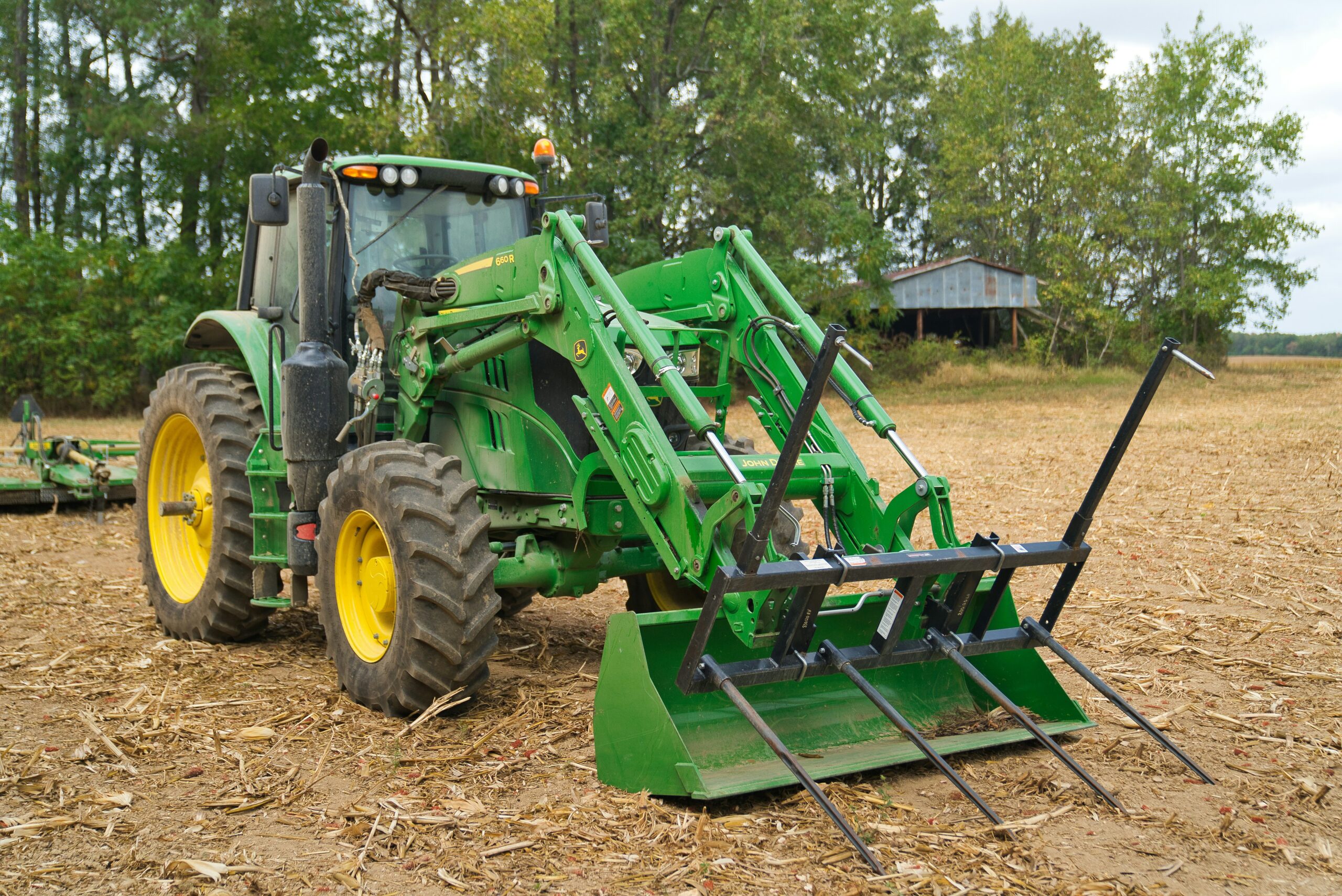
Managing a working property often comes down to a handful of repeat tasks: cutting overgrowth, maintaining a driveway, moving material, and putting up and maintaining fences. A compact tractor can handle nearly all of it. Attachments determine how efficiently the work gets done.
Before getting into specific tools, it helps to understand how attachments connect to a tractor.
How Tractor Attachments Work
Most compact tractors use two separate systems. They serve different purposes and are not interchangeable.
Front-end loader (front of tractor)
The hydraulic arm system mounted to the front. Usually included when the tractor is purchased. It handles front-mounted tools like a bucket, pallet forks, or grapple. Think lifting, carrying, and moving material.
3-point hitch (rear of tractor)
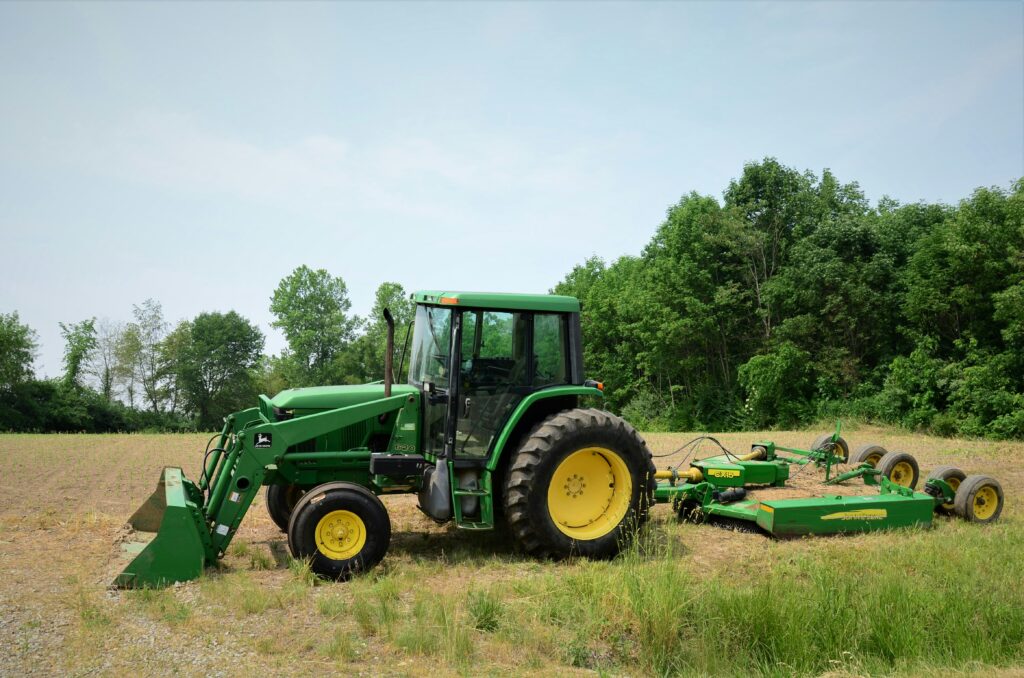
The mounting system on the back. This is where ground-engaging and cutting tools connect: box blades, rotary cutters, post hole diggers, land planes. These handle grading, cutting, and drilling work.
Knowing which system a tool connects to saves you from buying the wrong thing, or assuming an attachment that works on one end will transfer to the other.
Quick Picks
- Best overall setup: Front-end loader with bucket, rotary cutter, and box blade
- Best for driveway-heavy properties: Add a land plane
- Best for fencing projects: Add a post hole digger
This setup covers most of the work on a typical small farm or homestead.
Front-End Loader Bucket
The bucket comes standard on most tractors sold with a loader. It is the workhorse of the front end. Gravel, soil, debris, mulch, firewood, snow. You will run it constantly. Most loaders support quick-attach systems, which let you swap the bucket for pallet forks or a grapple without tools.
When you price out a tractor, verify whether the loader and bucket are included or sold separately. Some dealers price the base tractor without them and add them as a package.
Pallet Forks
Once you own a loader, pallet forks are one of the first add-ons worth considering. They turn your tractor into a small forklift: moving feed pallets, stacking firewood, handling fencing material, shifting heavy equipment around the property.
Buyers consistently report that pallet forks earn their cost quickly on any working property. Look for a frame rated to at least 2,000 to 4,000 lbs with a universal quick-attach mount.
Titan Attachments 48″ Pallet Fork Frame, 4,000 LB rated, skid steer quick tach
Box Blade
A box blade spreads and levels soil or gravel. If your property has a driveway or any uneven open ground, this is one of the most useful rear attachments you can own.
Common uses include maintaining gravel driveways, leveling pads for structures, filling low spots after heavy rain, and pushing soil around after digging or grading work. The scarifier teeth on the bottom of most box blades break up compacted material before the blade redistributes it, which is what separates them from a simple rear blade.
For most compact tractors in the 25 to 40 HP range, a 5 to 6 foot blade is the right fit.
Titan Attachments 6 FT Box Blade Scraper, Cat 0/1, reversible cutting edge
Rotary Cutter
A rotary cutter (also called a brush hog or bush hog) cuts thick grass, weeds, and light brush that a standard mower will not touch. This is the attachment that keeps rough ground manageable.
Typical uses include clearing overgrown fence lines, maintaining pasture, cutting back brush along field edges, and clearing areas before you can work them with other tools. For a property with any rough or unmowed ground, this is not optional. It is foundational.
Match the cutter width to your tractor. For a 25 to 35 HP machine, a 5 foot cutter is the standard fit. A slip clutch PTO shaft is worth having. It protects your gearbox when the blades hit something solid, which will happen.
Titan Attachments 5 FT PRO Series Rotary Cutter, Cat 1, slip clutch PTO, cast iron gearbox
Post Hole Digger
A post hole digger drills holes using a PTO-driven auger on the rear hitch. For any property that needs fencing, and most do, this tool pays for itself on the first project.
Digging fence post holes by hand is one of those jobs that sounds manageable until you are a third of the way through a hundred-foot run and your arms give out. A tractor-mounted auger gets the same job done in a fraction of the time, at consistent depth, regardless of how hard the ground is.
Auger bit size matters. A 9-inch auger is the most common choice for standard wood fence posts. Go to 12 inches for gate posts or anything that needs extra stability in the ground.
Titan Attachments 3 Point Post Hole Digger with 9″ Auger, Cat 1, up to 30 HP
Land Planer (Scraper)
A land plane smooths and levels gravel surfaces more cleanly than a box blade. Where a box blade excels at moving material around, a land plane is built for finish grading, producing a consistent, even surface on driveways and parking areas.
If your property has a gravel driveway you maintain regularly, a land plane is worth considering alongside or instead of a box blade. Buyers with heavy driveway maintenance needs often end up owning both: the box blade for moving material, the land plane for finishing.
rMechMaxx 72″ Land Plane Scraper Grader, 3-Point, Cat 1, 25–50 HP
Rear Blade
A rear blade pushes and shapes loose material in a single direction. It is simpler than a box blade: no scarifier teeth, no containment sides. And that simplicity makes it a versatile, affordable tool for light grading, snow removal, and clearing loose debris from drives and pads.
If budget is a consideration, a rear blade covers many of the same jobs as a box blade at a lower price point. It is less capable in compacted material, but on a property that primarily needs surface-level grading and maintenance, it gets the work done.
YITAMOTOR 52″ 3 Point Grader Blade for Cat-0 Cat-1 Tractors
What to Buy First
If you are starting from scratch, this setup covers the majority of work on a small farm or homestead:
- Front-end loader with bucket (usually comes with the tractor)
- Box blade or land plane (pick based on whether your priority is material moving or surface finishing)
- Rotary cutter
Add pallet forks when you start moving feed, fencing materials, or anything that comes on a pallet. Add a post hole digger when fencing becomes a real project rather than a future plan.
Buy what the work in front of you actually requires. Add more only when there is a clear reason.
If you are still working out which tractor makes sense for your property, we break that down here: How to Choose Your First Compact Tractor
Links may be added or updated over time. They do not affect how tools are selected or discussed.
Affiliate Disclosure This article may contain affiliate links. If you buy through one of those links, Working Acre may earn a small commission at no extra cost to you. Product mentions are based on usefulness, fit, and relevance to the topic.