Buying your first tractor is one of the bigger decisions you will make on a working property. It instantly becomes the most useful thing you own.
This guide walks you through what actually drives the decision: horsepower, transmission type, brand, new versus used, and dealer support. This is the framework that can keep you from making an expensive mistake.
Start With Your Work, Not the Machine
Before you look at a single spec sheet, write down everything you expect this tractor to do. Be honest and be specific.
Mowing pasture is not the same as running a rotary cutter through brush. Moving mulch with a front-end loader is not the same as lifting round hay bales. A tractor sized perfectly for mowing and light loader work will struggle with heavy ground engagement or baling, and you will know it every time you ask it to do something it was not built for.
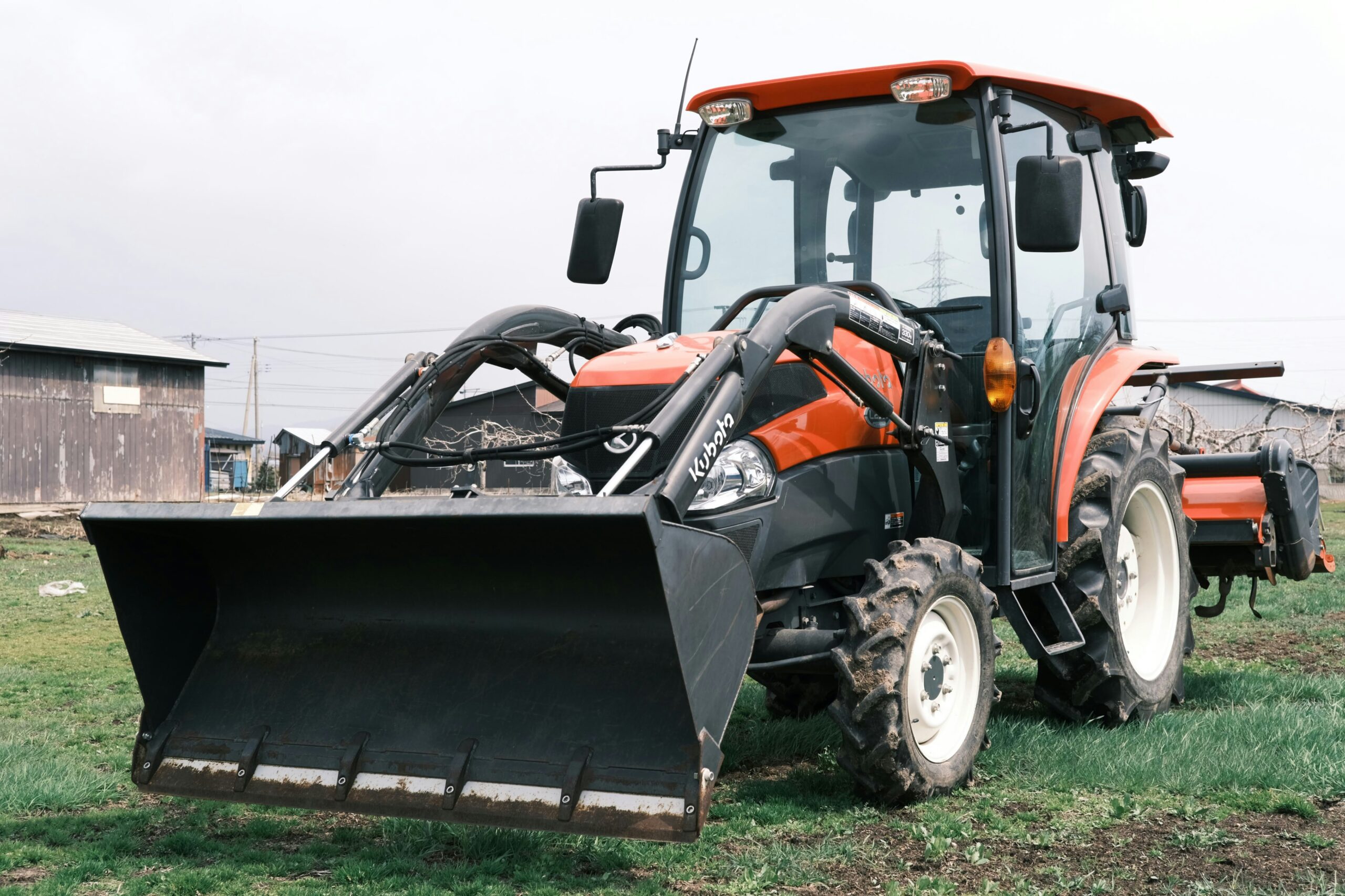
Common tasks on a small farm or homestead include mowing, loader work, box blade grading, tilling a garden, running a post hole digger, and light brush clearing. Most compact tractors in the right horsepower range handle all of these without complaint. Where buyers get into trouble is when they add hay production, heavy brush hog work in dense cover, or running a backhoe into the mix without sizing up accordingly.
Figure out your top three to five regular tasks. Build the decision around those.
Horsepower: The Number That Matters Most
For most small farms and homesteads, the right horsepower range is generally 25 to 40 HP. Here is how to think about where in that range you belong.
On the lower end, 25–30 HP handles mowing, light loader work, tilling a garden, and running a post hole digger without issue. Buyers consistently report that this range covers 90 percent of what a small property demands, and the machines are easier to maneuver, cheaper to buy, and less expensive to operate.
Toward the upper end, 35–40 HP gives you headroom. You can run a larger rotary cutter, push through tougher ground conditions, and handle loader work that would strain a smaller engine. If your property has rough terrain, significant brush, or you plan to grow into more demanding tasks over time, this is the range to target.
One thing worth understanding before you walk into a dealership: engine horsepower and PTO horsepower are not the same number. Engine HP moves the tractor. PTO HP runs your implements: your mower, tiller, and everything else attached at the rear. With a hydrostatic transmission, you typically lose 15–20 percent of engine power before it reaches the PTO shaft. A 25 HP tractor delivers roughly 20–21 HP to your implements. That is usually enough for the tasks listed above, but it matters when you are comparing specs and a salesperson is quoting engine numbers.
Transmission: Hydrostatic or Gear
Most first-time buyers land on hydrostatic, and for good reason.
A hydrostatic transmission (HST) is controlled with foot pedals. Forward and reverse are intuitive, speed is stepless, and you can change direction without touching a clutch. For loader work, mowing around obstacles, and any task that requires frequent speed changes, HST is significantly easier to operate. Buyers new to tractors almost universally prefer it.
Gear transmissions are more mechanically efficient at sustained speeds and hold an edge in fuel economy during long cultivation runs. Experienced operators often prefer them for fieldwork. For the average homesteader or small farm owner doing a mix of tasks, the simplicity and convenience of HST wins.
If your primary use is going to be long hours of steady fieldwork, not loader work, not mowing around trees, talk to your dealer about gear options. Otherwise, start with hydrostatic.
Brand and Dealer Support
Kubota and John Deere are the two names that consistently top reliability rankings and have the widest dealer networks in the country. Both have earned their reputations over decades of real-world use by real farmers. Buyers regularly report these machines holding up through high hours with proper maintenance.
Mahindra, Kioti, and New Holland are legitimate alternatives, particularly if value is a priority. Owners of these brands report solid performance and durability, and they often offer comparable specs at a lower price point than Kubota or Deere equivalents.
Here is the thing nobody tells you prominently enough: consider picking the brand with the closest authorized dealer to your property.
A tractor sitting in your barn waiting on a part while your fence needs fixing or your pasture is overgrown is not saving you money regardless of what you paid for it. Dealer proximity matters for routine service, warranty work, and the inevitable moments when something needs attention immediately. Before you commit to a brand, confirm where the nearest dealer is and whether they have a service department that actually services farm equipment.
New vs. Used
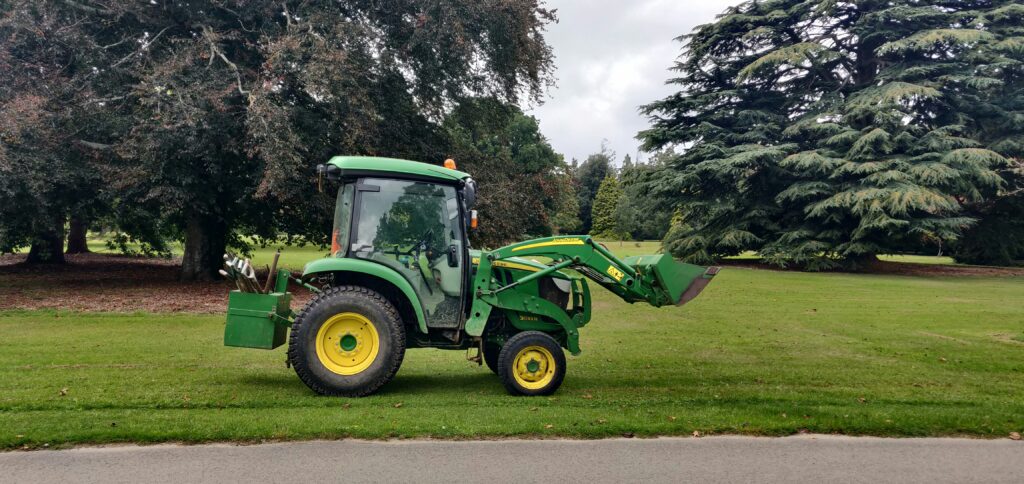
A well-maintained three to six year old Kubota or John Deere is one of the better values in farm equipment. These brands hold up, and a used machine with documented service history can save you thousands while delivering the same capability as a new one.
What to look for on a used compact tractor:
- Service records. No records is a yellow flag, not a dealbreaker, but factor it into your offer.
- Hours relative to age. Light use on an older machine is not a problem. Heavy hours on a young machine is worth investigating.
- Any visible leaks, especially around the hydraulic system and front axle seals.
- Condition of the loader if one is included. Cylinders, pins, and the curl function should operate smoothly.
- Three-point hitch operation. Raise and lower it with something on it. It should be smooth and hold position.
If you are buying new, ask your dealer about package deals that bundle a loader and common attachments. Package pricing is often better than buying components separately, especially at end of quarter or during seasonal sales.
What This Decision Looks Like in Practice
For most small farms and homesteads doing mowing, light loader work, and general maintenance, a 25–35 HP compact tractor with a hydrostatic transmission and a front-end loader covers the work. Buyers in this category consistently report that this combination handles everything they actually do on a day-to-day basis.
If you plan to produce hay, run a backhoe regularly, or work heavily timbered or hilly ground, move toward the upper end of the HP range and have that conversation explicitly with your dealer before you sign anything.
The loader question is worth addressing upfront: if you think you might want a backhoe at any point, ask about it before you buy. Adding one after the fact often requires installing a sub-frame, which many dealers do not retrofit cleanly, and it costs significantly more than ordering it configured from the start.
What to Budget Beyond the Tractor
The sticker price is only part of what you are going to spend in year one. Here is what to plan for before you sign anything.
Hydraulic fluid and lubricants. Every tractor needs its hydraulic fluid checked and changed on schedule. A multi-brand compatible option like TRIAX Agra UTTO XL works across Kubota, John Deere, Massey Ferguson, and most other brands, which saves you from keeping brand-specific fluids on the shelf. Budget for a 5-gallon pail at the start and another mid-season if you are running the machine hard.
A grease gun. Compact tractors have grease zerks on loader pins, three-point hitch arms, and various pivot points. Skipping this is how you turn a small maintenance job into an expensive repair. The 3M WorkTunes Connect Bluetooth Hearing Protector is not a grease gun obviously, but buyers consistently report that a cordless electric grease gun saves significant time over a manual one. A model like the DEWALT 20V MAX Cordless Grease Gun does the job on all your zerks in minutes rather than half an hour with a hand pump.
Hearing protection. A tractor cab without a cab enclosure runs around 85 to 95 decibels depending on load and engine speed. That is hearing damage territory over a full day of work. The 3M WorkTunes Connect is the most popular option in this category for a reason: 26dB noise reduction, Bluetooth for music or podcasts, and built for extended outdoor use. Buyers who spend long hours on the seat consistently recommend it over standard earmuffs.
Work gloves. A basic but real expense. You will go through several pairs in year one between loader work, fencing, and general property chores.
Implement storage. If you are buying attachments, you need somewhere to put them when they are not on the tractor. Factor in a small implement storage solution or lean-to before you start accumulating a box blade, rotary cutter, and post hole digger.
A realistic first-year ownership budget beyond the tractor purchase is $400 to $800 for maintenance supplies, hearing protection, and basic safety gear. Plan for it upfront rather than finding out in April.
Before You Buy
Visit the dealership and sit in the seat. Controls vary between brands and models, and how a tractor feels to operate matters over a long day of work. Ask the dealer to walk you through the PTO engagement, three-point hitch controls, and loader operation. If they are not willing to spend that time with you, find a different dealer.
Check current pricing on compact tractors from Kubota, John Deere, Mahindra, and Kioti before you commit to anything. Prices move, and the right machine at the right price is out there.
Once you have the tractor sorted, the next question is what goes on the back of it. We cover the best compact tractor attachments for small farms and homesteads here.
Links may be added or updated over time. They do not affect how tools are selected or discussed.
Affiliate Disclosure This article may contain affiliate links. If you buy through one of those links, Working Acre may earn a small commission at no extra cost to you. Product mentions are based on usefulness, fit, and relevance to the topic.