
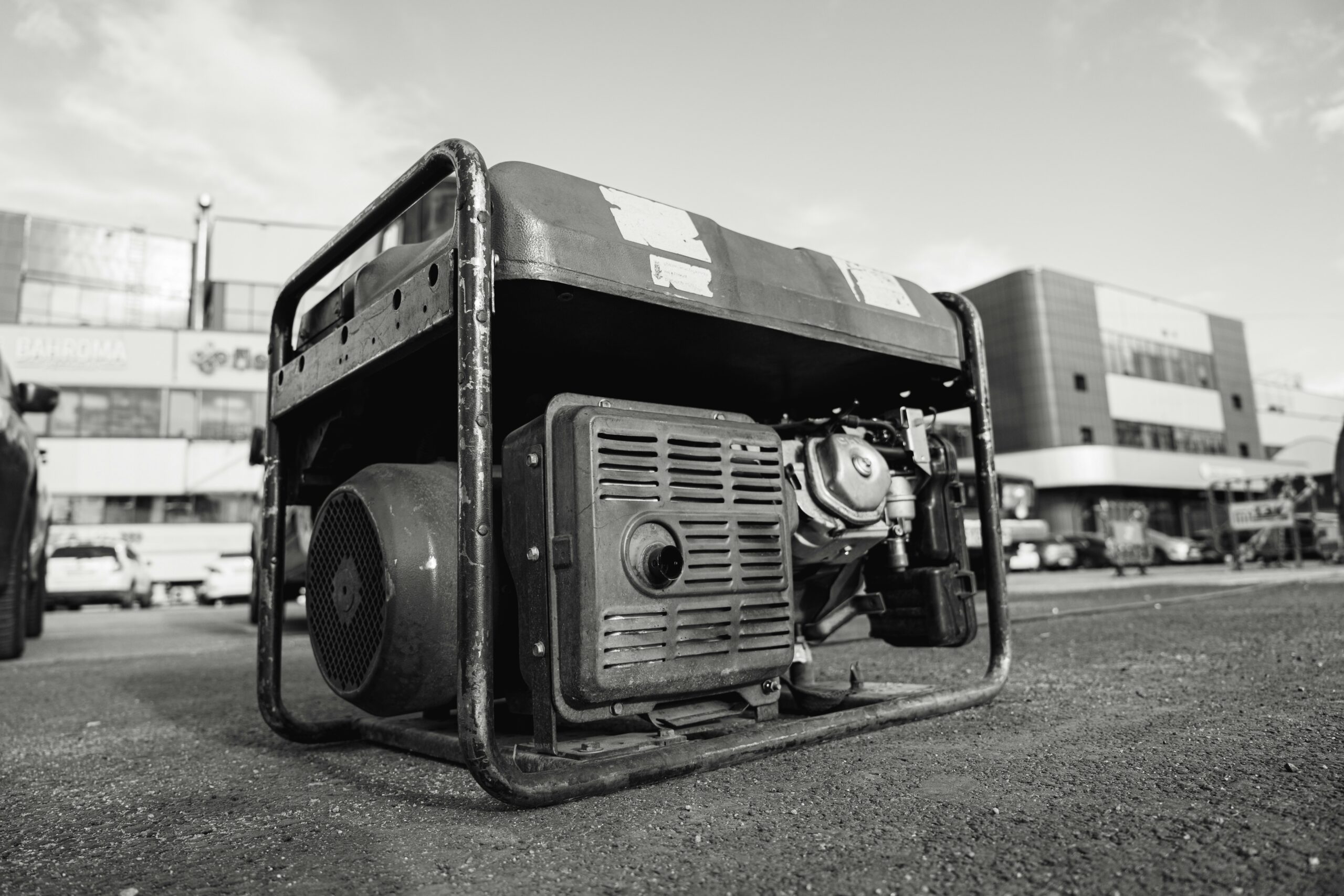
A power outage at home is a major inconvenience. A power outage on a farm or homestead is an even larger problem. Well pumps stop. Stock tank heaters go cold. Refrigerated medicine or feed supplements spoil. Electric fencing goes down. If you heat with a forced-air furnace, your house gets cold. The list goes on.
While a portable generator can not solve every outage scenario, they do cover the essentials while the grid is down, and costs a fraction of a permanently installed standby unit. For many small farms and homesteads, it is the right tool for the job.
What to Understand Before You Buy
Starting Watts vs. Running Watts
Every generator has two wattage ratings and both matter.
Running watts is the continuous output the generator sustains during normal operation. This is the number that determines what you can run at once.
Starting watts is the surge capacity available for a brief moment when a motor-driven appliance starts up. Electric motors like well pumps, refrigerators, air compressors, and stock tank heaters draw significantly more current at startup than they do while running. A well pump that runs on 1,000 watts may require 3,000 starting watts to get the motor turning.
Always calculate your needs based on running watts and verify your highest-draw motor load does not exceed starting watts. A generator that runs everything fine but cannot start your well pump is not sized correctly for your property.
Dual Fuel vs. Single Fuel
Gasoline is convenient in normal conditions and widely available, but it has a short shelf life of six months to a year without stabilizer, and during extended outages or supply disruptions, gas stations run out fast.
Propane stores indefinitely, burns cleaner, and is already on many farm properties for other uses. A dual fuel generator that runs on either gasoline or propane gives you flexibility during extended outages and simplifies long-term storage. Most dual fuel generators produce slightly fewer watts on propane than on gasoline, typically 5 to 10 percent less, which is worth accounting for in your sizing.
Tri-fuel generators that add natural gas as a third option exist and are worth considering if your property has a natural gas line.
Inverter vs. Conventional
A conventional generator produces AC power directly from the engine. Output is not perfectly clean and can vary slightly with load changes. For most farm and homestead applications: running pumps, lights, fans, stock tank heaters, and refrigerators. A conventional generator handles all of these without issue.
An inverter generator produces cleaner, more stable power by converting to DC and back to AC electronically. This matters for sensitive electronics like laptops, medical equipment, and modern appliances with complex control boards. Inverter generators are also significantly quieter and more fuel-efficient at partial loads. They cost more at the same wattage.
For most farm and homestead applications, a conventional generator handles the critical loads. If you also need to run sensitive electronics or value quiet operation, an inverter generator is worth the premium.
Transfer Switch
Connecting a generator directly to your home’s electrical panel requires a transfer switch, a device that safely isolates your home’s circuits from the utility grid while the generator is running. Without one, you are limited to running extension cords from the generator to individual appliances.
A transfer switch requires professional installation and adds cost, but it allows you to run hardwired circuits including well pumps, HVAC, and barn systems directly from the generator without extension cords. If powering a well pump or barn electrical systems is a priority, budget for a transfer switch alongside the generator purchase.
Most generators include a transfer switch-ready outlet. Not all electricians are familiar with generator transfer switch installation. Confirm experience before hiring.
Carbon Monoxide Safety
Generators produce carbon monoxide and must never be operated indoors, in a garage, or near open windows or doors. CO is odorless and kills quickly. Most current-model generators include automatic CO shutoff sensors that detect dangerous CO levels and shut the unit down. This feature is worth having.
Operate the generator at least 20 feet from any structure with the exhaust directed away from windows and doors.
What You Need to Power
Before buying a generator, calculate the running watts of everything you plan to keep on during an outage. A rough reference:
- Well pump (1 HP): 750 running watts, 2,000 to 3,000 starting watts
- Refrigerator: 150 to 400 running watts, 1,000 to 1,500 starting watts
- Chest freezer: 100 to 300 running watts
- Stock tank heater (1,500W): 1,500 running watts
- Electric fence charger: 1 to 50 watts depending on model
- Forced air furnace (fan only): 300 to 800 watts
- Lighting (LED): 10 to 15 watts per fixture
- Phone and device charging: minimal
A property running a well pump, two refrigerators, a chest freezer, and basic lighting needs at minimum 3,500 to 5,000 running watts with enough starting capacity to handle the well pump surge. Add a stock tank heater and you need more headroom.
Recommended Generators
Best for Essential Loads: Champion 4375-Watt Dual Fuel
The Champion 4375-Watt Dual Fuel generator is the entry point that covers the core needs of most small properties: well pump, refrigerator, freezer, lights, and device charging. It produces 4,375 starting watts and 3,500 running watts on gasoline, and 3,950 starting watts and 3,150 running watts on propane.
It includes Champion’s Volt Guard surge protector, CO Shield automatic carbon monoxide shutoff, Intelligauge for monitoring voltage and runtime hours, Cold Start Technology for reliable starting in cold weather, and a 3-year limited warranty with lifetime technical support. Buyers consistently report reliable starting and solid performance through extended outages.
At this output level, running everything simultaneously is tight. Prioritize the well pump and refrigeration and cycle other loads as needed. This generator is the right fit for a property that needs essential backup coverage without a large investment.
Champion Power Equipment 4375-Watt Dual Fuel Portable Generator with CO Shield
Best Mid-Range Option: Westinghouse WGen7500DF Dual Fuel
The Westinghouse WGen7500DF steps up to 9,500 peak watts and 7,500 running watts on gasoline, enough to run a well pump, multiple refrigerators, a stock tank heater, barn lighting, and a furnace fan simultaneously with headroom to spare. On propane it produces 8,550 peak watts and 6,750 running watts.
The WGen7500DF includes push-button electric start with a wireless remote key fob, a built-in fuel gauge, automatic low oil shutdown, GFCI household outlets, and a transfer switch-ready L14-30R outlet for connecting directly to a home panel. The 420cc Westinghouse engine is built with a cast iron sleeve for long service life. Backed by a 3-year limited warranty with a nationwide service network.
For a property that wants to run the full household plus barn essentials without managing what is on and what is off, this is the output range that removes that constraint.
Westinghouse WGen7500DF Dual Fuel Portable Generator, 9,500 peak watts, transfer switch ready
Best for Higher Demand Properties: Westinghouse 6500-Watt Dual Fuel Home Backup Generator
For properties that need more than the Champion can handle but do not require the full output of the WGen7500DF, the Westinghouse 6500-Watt Dual Fuel Home Backup Generator fills that gap cleanly. It delivers 5,300 running watts and 6,500 peak watts on gasoline, and 4,800 running watts and 5,800 peak watts on propane, enough to run a well pump, stock tank heater, refrigerator, freezer, and barn lighting simultaneously without managing loads.
It includes a transfer switch-ready L14-30R outlet, an RV-ready TT-30R outlet, a built-in CO sensor with automatic shutoff, a 274cc Westinghouse cast iron sleeve engine, and a volt selector switch for 120V or 240V operation. Run time is up to 14.5 hours on a 4.7-gallon tank. Backed by a 3-year limited warranty with a nationwide service network.
For a small farm running multiple buildings or livestock systems, this is the output range that removes the need to choose what stays on and what gets shut off during an outage.
Westinghouse 6500-Watt Dual Fuel Home Backup Portable Generator, transfer switch ready, CO sensor
Best Quiet Option: Westinghouse 4000-Watt Dual Fuel Inverter Generator
The conventional generators above produce enough noise, typically 68 to 72 dBA, that you know they are running. For properties where the generator runs close to living spaces, livestock areas, or for extended periods, an inverter generator is worth considering.
The Westinghouse 4000-Watt Dual Fuel Inverter produces cleaner power with less than 3% total harmonic distortion, making it safe for sensitive electronics including medical equipment, laptops, and modern appliance control boards. It runs quieter than a conventional generator at comparable output and includes remote electric start via key fob, a CO sensor with automatic shutoff, parallel capability to connect two units and double output, and an RV-ready 30A outlet.
On gasoline it delivers 4,000 peak watts and 3,500 running watts. On propane, 3,600 peak watts and 3,150 running watts. Run time is up to 18 hours at 25 percent load on gasoline, longer than most conventional generators in this wattage range due to inverter technology’s fuel efficiency at partial loads.
The tradeoff is cost. Inverter generators run more expensive than conventional generators at the same wattage. For a property that primarily needs backup power a few times a year and wants quiet, clean operation without the noise of a conventional machine, the premium is justified.
A Few Practical Notes
Store fuel properly. Gasoline degrades in as little as 30 days without stabilizer. Add a fuel stabilizer when storing, rotate your supply, and run the generator briefly every few months to keep the carburetor clear. Propane stores indefinitely and does not degrade. That is another reason dual fuel makes sense for backup power that may sit unused for months.
Run it under load before you need it. Start the generator and run your loads through it at least once a year. A generator that has not been tested under load may not perform as expected during an actual outage.
Keep an oil change on the schedule. Most portable generators need an oil change after the first 20 hours of operation and every 50 to 100 hours after that. Check your manual. A generator that runs dry or runs on degraded oil during an extended outage is not useful.
Extension cords matter. If you are not using a transfer switch, use heavy-gauge extension cords rated for the load. Undersized cords cause voltage drop and can overheat. For a well pump or stock tank heater, a 12-gauge cord at minimum, 10-gauge for longer runs.
Links may be added or updated over time. They do not affect how products are selected or discussed.
Affiliate Disclosure This article may contain affiliate links. If you buy through one of those links, Working Acre may earn a small commission at no extra cost to you. Product mentions are based on usefulness, fit, and relevance to the topic.